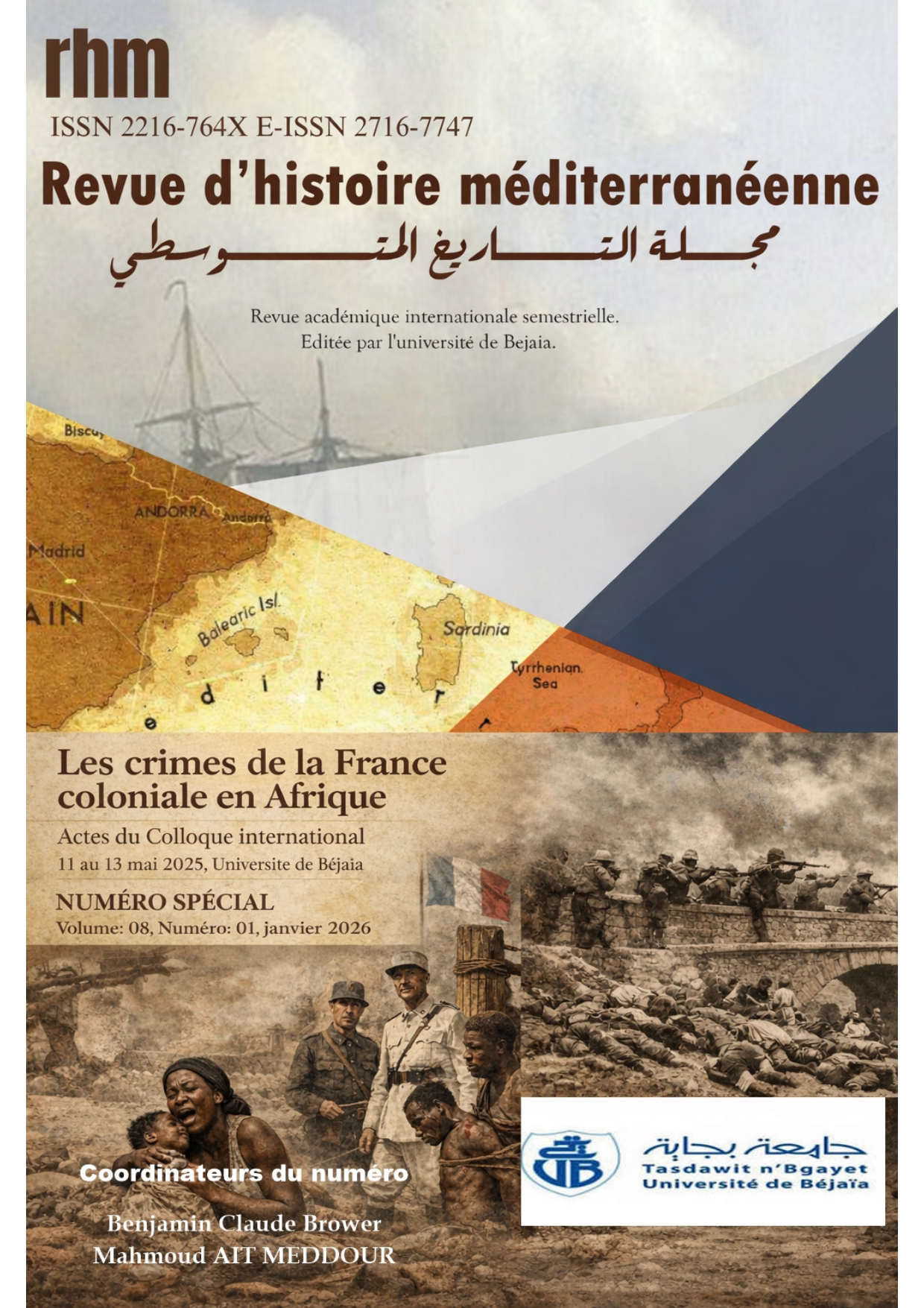
Massacres du mai 1945 en Algérie : le complot prémédité ?
Résumé
Cette étude essaie d’apporter du neuf sur un fait qui a attiré l’intérêt des historiens en l’occurrence les évènements du 08 mai 1945. Cela peut être possible en présence de documents d’archives importants.
Le mardi 8 mai 1945, la population algérienne, comme celle du reste du monde, célèbre la victoire des Alliés sur l’Allemagne nazie. Mais, au-delà de la joie générale, beaucoup d’Algériens voient cette journée comme une occasion d’exprimer leurs aspirations à la liberté et à l’indépendance. À Sétif, un cortège organisé par des militants nationalistes défile dans les rues, arborant des drapeaux algériens et des banderoles réclamant la fin du colonialisme. La tension monte rapidement lorsque les forces de police, épaulées par des colons armés, tentent de s’emparer de l’emblème national
Un coup de feu retentit en direction de Saal Bouzid, un jeune Algérien qui avait repris le drapeau national de la main d’Aissa Cheraga. Ce coup de feu déclenche le bain de sang : les manifestants jettent des pierres, la police et les gendarmes ouvrent le feu. Le chaos s’installe dans la ville, et la répression prend rapidement une ampleur massive. Les forces coloniales utilisent des armes de guerre : fusils, mitrailleuses et parfois même artillerie légère. Les violences s’étendent aux villages alentours.
Parallèlement, des milices de colons, organisent des raids punitifs dans les campagnes, incendiant des maisons et tuant sans distinction hommes, femmes et enfants. Les autorités coloniales, redoutant l’élan nationaliste, auraient attendu un prétexte pour frapper durement et briser toute velléité de soulèvement. De nombreux Algériens du 7e RTA avaient combattu dans l’armée française pendant la Seconde Guerre mondiale, espérant obtenir en retour des réformes politiques et un avenir meilleur. Leur colère et leur désillusion s’accentuent face à la brutalité de la répression et à l’ampleur de l’horreur découverte.
La plupart des organes de presse de l’époque présentent les Algériens comme des « insurgés sanguinaires » et minimisant le nombre de victimes. Des décennies plus tard, les témoignages recueillis contredisent cette version : ils évoquent des rafles massives, des tortures, des exécutions sommaires et des disparitions forcées. La participation active des Européens armés ne faisait pas doute, malgré l’ignorance remarquée dans les archives officielles.
La méthode d’analyse consiste à la reconstitution des faits en respectant la chronologie et en essayant d’expliquer le sens d’un tel évènement et particulièrement qui a poussé la France à commettre un tel massacre.
Le corpus utilisé est riche. Il se compose de documents officiels français : rapports militaires, coupures de journaux, notes administratives, une documentation récupérée au centre d’archives d’outre-mer. Il y a également des études académiques comme celles de J.P Peyroulou, Jean Louis Plache , Mekhalid Boucif , Mahfoud Kheddache , Ainad-Tabet.
Le 08 mai 1945 est une date clés dans l’évolution du mouvement national. Il y a désormais l’avant et l’après 08 mai 1945. Les acteurs du courant indépendantistes ont su tirer les enseignements nécessaires pour suite de leur combat : il n’est plus question de recours aux manifestations de masse ou d’attendre une éventuelle libération venant des Français. Le salut passe par la lutte armée.